
Monasteries of Mongolia: A spiritual journey 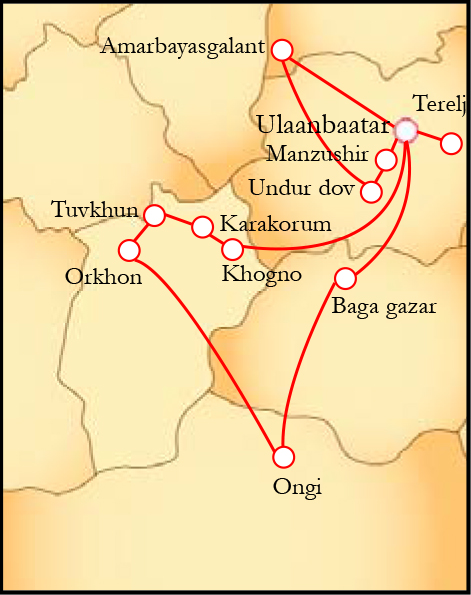
Mongolia’s religious roots are bound up in Shamanist. Shamanist was the major religion during both the ancient Mongol states and the Mongol Empire until Tibetan Buddhism (also called Vajrayana Buddhism) gained more popularity after it was introduced in 16th century. Tibet’s Dalai Lama is the religion’s spiritual leader, and is highly respected in Mongolia. Buddhism was introduced to Mongolia from Tibet by Khublai Khan during the late 16th century. Khublai Khan invited an eminent Tibetan lama, Pagba, to be the empire’s religious representative. From the late 14th century onwards hundreds of Buddhist temples were rapidly built across Mongolia. Thousands of Mongolian males vowed to lives as lama – at one point almost one seventh of the male population had taken robes. Until the beginning of the twentieth century Buddhism developed and spread across the country, playing an important role in both religious and intellectual spheres of life.
Day 1: Ulaanbaatar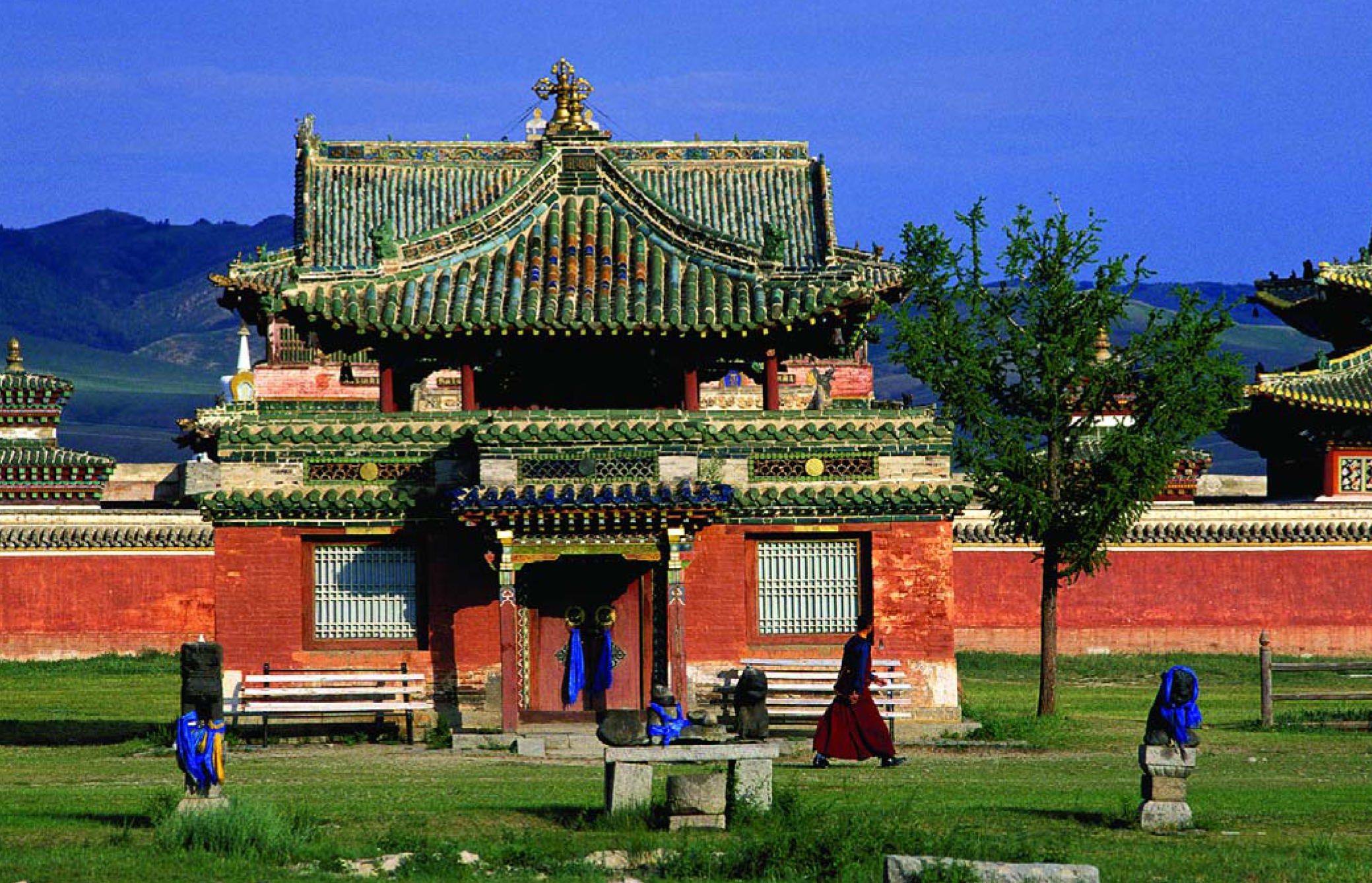
The Mongolei Reisen crew will greet you at the Buyant-Ukhaa International Airport for transfer to the 4 star hotel, conveniently situated in downtown Ulaanbaatar. After freshening up from your trip, we will spend the day touring some of the capital’s most noteworthy sites starting out at the capital of Mongolian Buddhism, Gandan Monastery. The monastery was one of the few preserved through the 20th century and features a spectacular 25 meter, 20 ton statue of the Megjjd Janraysig Buddha. From here, we will go to the Natural History Museum which holds the skeletons of several of the unique dinosaurs discovered in Mongolia, including the famed ‘Fighting Dinosaurs’ skeletons – considered to be one of the most unique in the world. The heart of Ulaanbaatar, Sukhbaatar Square, is just a short walk away. Here we will see the statue of Sukhbaatar, the hero of the Mongolian revolution, the Parliament house, National Opera, and City Hall. Afterwards we’ll visit Zaisan Hill, which offers great views of the city. In the evening, you will attend a performance of traditional dancing and khoomii (Mongolian throat singing). Overnight in hotel. (L, D)
Day 2: Baga Gazriin Chuluu
We explore the intriguing rock formations at Baga Gazriin Chuluu, discovering the secret caves and openings in which Buddhist monks hid during the religious persecutions of the 1930s. Overnight in ger camp (B, L, D)
Days 3 – 4: Ongi Monastery
Our next destination is Ongi Monastery, formerly home to a community of more than 500 Buddhist monks, whose ruined structures testify to the devastating religious purges of the 1930s. On the way to Ongi Monastery you will have the opportunity to visit a local camel-breeding family and learn about their unique nomadic lifestyle. Overnight in ger camp (B, L, D)
Days 5 – 6: Orkhon waterfall
After breakfast we drive to the Orkhon waterfall - whose thundering cascades can be heard from far away. There is plenty of time to explore this area of crevices and other volcanic formations, stopping along the way to examine relics and historic sites associated with the ancient Turkic state, whose empire once extended across Central Asia. Overnight in ger camp (B, L, D)
Day 7: Tuvkhun monastery
After breakfast we travel to the outstanding Tuvkhun Monastery, located at the peak of a
remote, wooded mountain. A short hike up the mountain path leads to this relaxing location where we will learn about the history of this important pilgrimage site and the heritage of its founder, the great religious figure Undur Gegeen Zanabazar, who produced many celebrated works of art at this site after choosing Tuvkhun for his meditation retreat in 1651. With an exquisitely peaceful view over the surrounding larch forest from an altitude of more than 2000 metres, you will have no trouble understanding why Tuvkhun is considered such a sacred location. This is a great opportunity to trek up the narrow mountain path and meditate in this silent environment. Overnight in ger camp (B,L,D)
Day 8: Shankhiin Khiid Monastery & Erdene Zuu Monastery
We’ll start with a visit the popular monastery of Shankiin Khiid, formerly one of the largest
Buddhist communities in Mongolia and the site where the black standard of Chinggis Khaan continued to be kept and worshipped up until the 1930s. From here, we travel to Karakorum, the former capital of the world’s greatest land empire, established by Chinggis Khaan. Here we will tour the fascinating Erdene Zuu Buddhist Monastery, a vast religious complex surrounded by 108 stupas, established on the ruins of Karakorum in 1586 by Abtai Sain Khan. The site has exquisite architecture and numerous works of art. Overnight in ger camp (B, L, D)
Days 9 – 10: Khogno Khan Mountain
The day starts with a drive to the imposing Khogno Khan Mountain, one of the top attractions of Mongolia. The panoramic view from the mountain will give an unforgettable impression of Mongolia’s size. On a clear day, we’ll be able to see over 200 kilometres over the landscape. We will then visit the Mongol Els Sand Dunes, located unexpectedly in the middle of the great steppe, and tour the small Ovgon Monastery, nestled in the mountain cliffs. Overnight in ger camp (B, L, D)
Day 11: Terelj National Park via Ulaanbaatar city 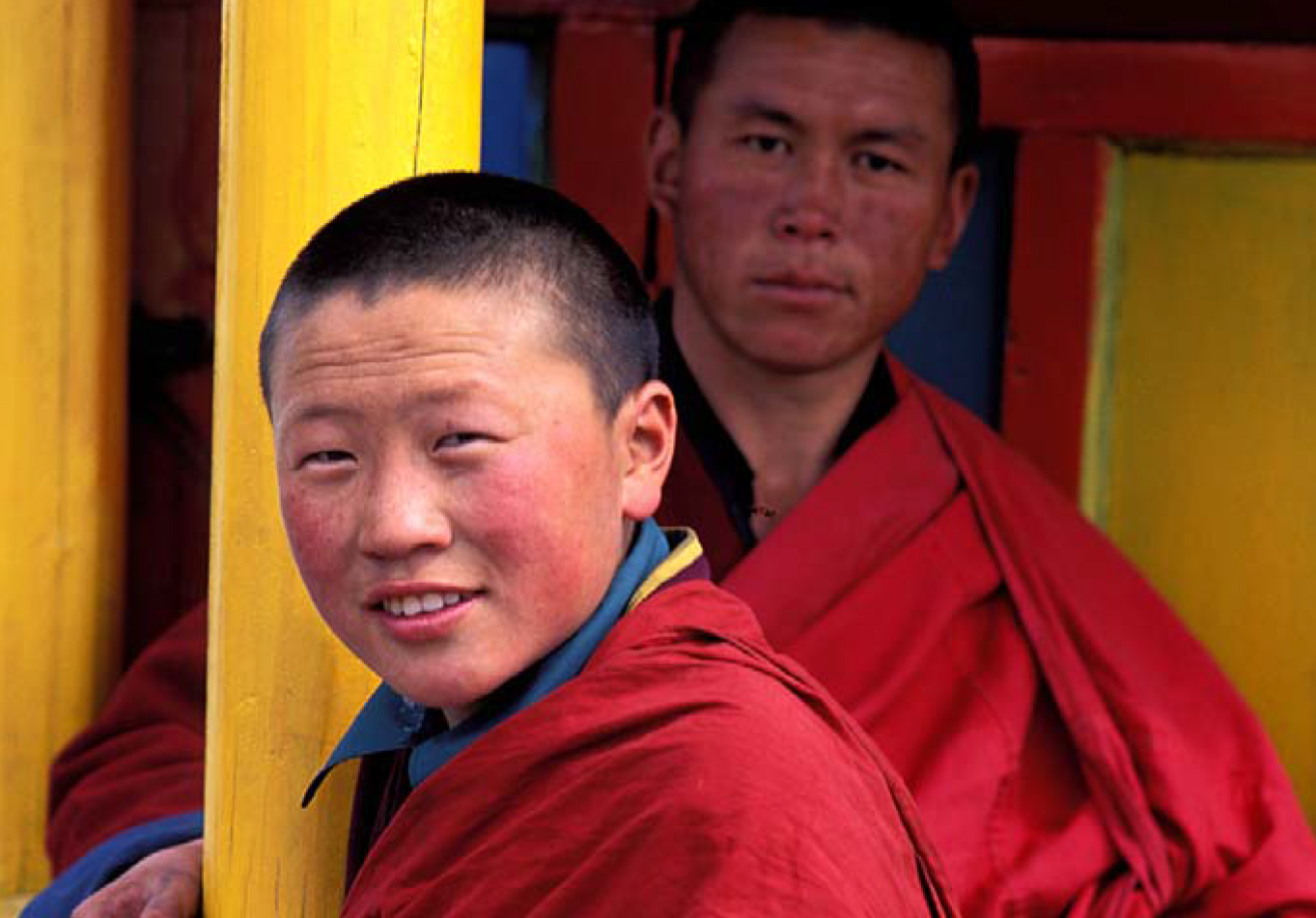
Driving back to the capital city one of the only paved countryside roads, we’ll continue directly to Terelj National Park, famous for its stunning rock formations and beautiful alpine scenery. We’ll spend some time in the park at Aryaval monastery for reflection and meditation. Lodging in ger camp (B, L, D)
Day 12: Amarbayasgalant Monastery
Next up is the city of Erdenet, one of Mongolia’s largest industrial centres. Nearby is
Amarbayasgalant Monastery. Built in 1736 under the direction of the Manchu Emperor in memory of Undur Gegeen Zanabazar, Amarbayasgalant is one of the few monastic complexes that survived the religious purges of the 1930s nearly untouched, and remains one of the most significant monuments of Buddhist architecture in North Asia. Overnight in ger camp (B, L, D)
Day 13: Undur Dov
We’ll spend one day to relax in this friendly community visiting local families and learning about Mongolia’s ancient herder culture. Overnight in ger camp (B, L, D)
Day 14: Manzshir Monastery
Next we visit Manzshir Monastery, located on the tree-lined southern slopes of the sacred Bogd Khan Mountain. We’ll hike among the ruins of this 18th-century monastery, exploring the restored main temple and numerous sacred images on the nearby mountain face. In the evening we return to Ulaanbaatar for a concert by the renowned Tumen Ekh folk song and dance ensemble, presenting long-songs, throat singing, dance and contortion. Overnight in hotel (B, L, D)
Day 15: Departure
Our adventure together ends with your transfer back to the Buyant-Ukhaa International Airport for your departure.