
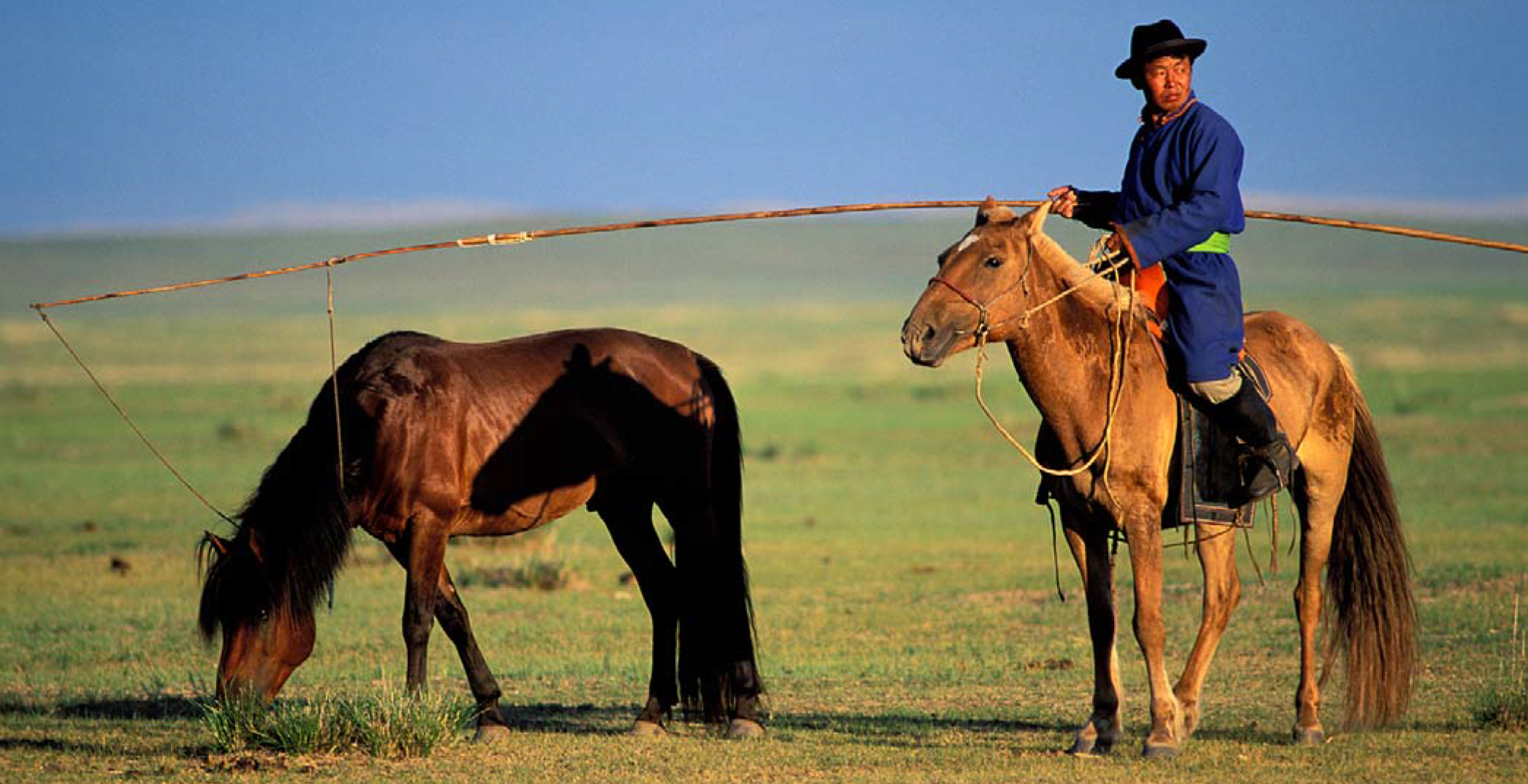
The history of the “empire of the steppes”, like that of nomadic pastoralism, is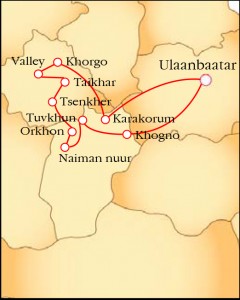 indissolubly linked to horses. According to a Mongol saying, “a Mongol without a horse is like a bird without wings”. Mobility was the key concept and the most important strategic doctrine of the Turco-Mongol tribes-the tactics and logistics of their armies were entirely determined by the horse. Horses were broken in through long hunts organized since the time of the Hunnu in
which up to 10.000 horsemen took part. In the Mongol period, each autumn, the khan organized large hunts to help train his cavalry. The Mongol horse is small, being about height of a double pony (1.3 meters at the shoulder) and relatively light (between 300 and 350kilos on average).
Unlike Westerners, Mongols do not give their horses names.
 Day 1: Ulaanbaatar city Upon your arrival at the Buyant-Ukhaa International Airport in Mongolia, you will meet the Khan summit crew and transfer to the 4 star hotel, conveniently situated in downtown Ulaanbaatar. After freshening up from your trip, we will spend the day with a walking tour of some of the capital’s most noteworthy sites starting out at the Museum of National History where you’ll encounter exhibits highlighting the amazing history of the Mongolian people. The museum has several interested exhibits of national costumes and some artifacts from time of Chinggis Khaan. From the museum, it’s a short walk to the heart of Ulaanbaatar, Sukhbaatar Square. Here we will see the statue of Sukhbaatar, the hero of the Mongolian revolution, the Parliament house, National Opera, and City Hall. Afterwards we’ll visit Zaisan Hill, which offers great views of the city. In the evening, you will attend a performance of traditional dancing and singing. Mongolia is best known for the traditional form of throat singing, khoomii, and the horse-headed fiddle that accompanies
many traditional songs. Overnight in hotel (L, D)
Day 2: Khogno Khan Mountain
The day starts with a drive to the imposing Khogno Khan Mountain, one of the top attractions of Mongolia. The panoramic view from the mountain will give an unforgettable impression of Mongolia’s size. On a clear day, we’ll be able to see over 200 kilometres over the landscape. We will then visit the Mongol Els Sand Dunes, located unexpectedly in the middle of the great steppe, and tour the small Ovgon Monastery, nestled in the mountain cliffs. Overnight in ger camp (B, L, D)
Day 3: Tuvkhun Monastery
After breakfast we travel to the outstanding Tuvkhun Monastery, located at the peak of a
remote, wooded mountain. A short hike up the mountain path leads to this relaxing location where we will learn about the history of this important pilgrimage site and the heritage of its founder, the great religious figure Undur Gegeen Zanabazar, who produced many celebrated works of art at this site after choosing Tuvkhun for his meditation retreat in 1651. With an exquisitely peaceful view over the surrounding larch forest from an altitude of more than 2000 metres, you will have no trouble understanding why Tuvkhun is considered such a
sacred location. Overnight in ger camp (B, L, D)
Day 4: Toward Naiman Nuur
We will continue south from Tuvkhun Monastery in the direction of Naiman Nuur, the “Eight Lakes” stopping on the way for short hikes through the mountains of the Khangai Range, exploring crevices left by ancient earthquakes and gorges along the Orkhon River. Overnight in tents (B, L, D)
Days 5 – 6: Naiman Nuur Lake
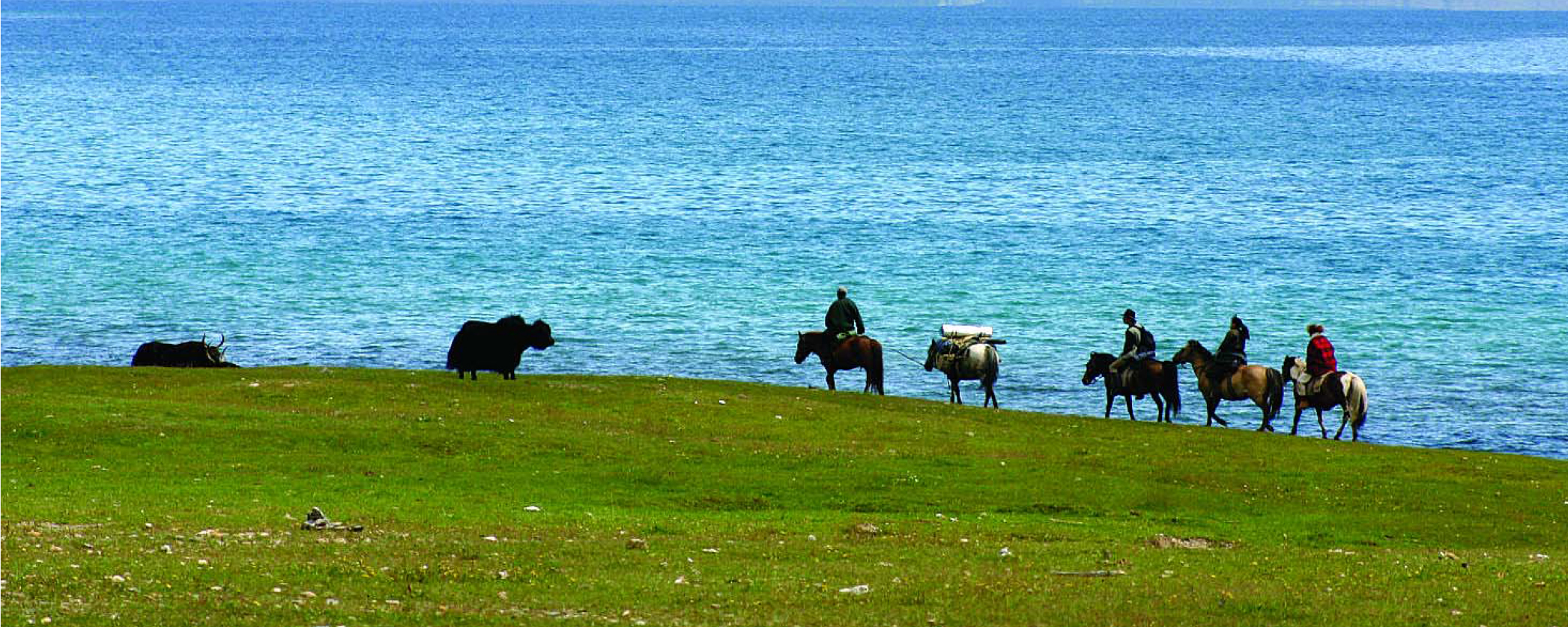
Enjoy a challenging day of hiking in the area of Naiman Nuur, a natural formation of eight lakes situated 2200 metres above sea level, nestled in the forested Khangai Mountains. Extinct volcanic craters interspersed throughout these lakes create a breathtaking visual landscape. Overnight in tents (B, L, D)
Day 7: Orkhon waterfall
After breakfast we drive to the Orkhon waterfall - whose thundering cascades can be heard from far away. There is plenty of time to explore this area of crevices and other volcanic formations, stopping along the way to examine relics and historic sites associated with the ancient Turkic state, whose empire once extended across Central Asia. Overnight in tents (B, L, D)
Day 8: Tsenkher Hot Springs
We now head northwards to the Tsenkher hot springs, with the opportunity to take short walks along the way through the surrounding larch forests and meadows of colorful wildflowers. We’ll relax at the Tsenkher Hot Springs, where the water flows out of the ground at a sizzling 89°C. Overnight in ger camp (B, L, D)
Day 9: Taikhar rock
Taikhar Rock, an immense natural monument situated incongruously in the middle of the steppe - offers an exotic contrast to the nearby riverbanks coated with colourful flowers and grasses, and the larch-covered mountains in the distance. Overnight in ger camp (B, L, D)
 Days 10 – 13: Valleys of Arkhangai
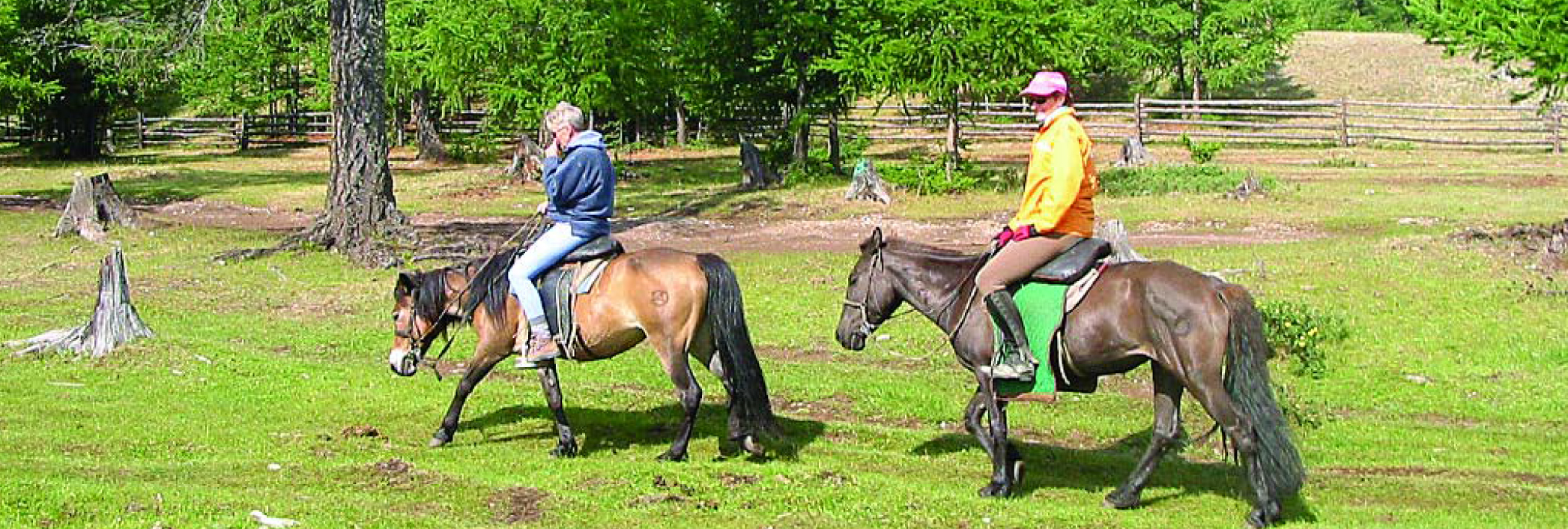
A challenging horse trek adventure leads westward towards some of the most beautiful corners of Central Mongolia. Travelling off the beaten track, we will ride through the lush green steppe and by the stunning canyons of the Chuluut River, where visiting families of nomadic horse breeders will be one of the most memorable experiences of the trip. Overnight in tents. (B, L, D)
Days 14 – 15: Horgo volcano
We’ll then travel further west through beautifully forested valleys and meadows, stopping by exceptional spots such as Zuun Mod – the “Hundred Tree” – a sacred tree hidden by thick layers of blue scarves deposited by worshippers, and the stunning Chuluut River Gorge. Along the way we will also visit the museum in Tsetserleg, located in the former Zayiin Khuree Monastery, and examine the fascinating displays of authentic ethnographic and
religious objects. We continue onwards to the great volcanic crater of Khorgo, which created a vast field of basalt formations and the 16-kilometrelong Terkhiin Tsagaan Lake, situated 2200 metres above sea level, with a depth of 200 metres. A hike up to the summit of the volcanic crater is rewarded with a breathtaking view of the surrounding landscape, including the nearby lake. There are excellent opportunities during the rest of the day for birdwatching, hiking, horseback riding or fishing. Overnight in ger camp (B, L, D)
 Day 16: Karakorum
Our next stop is Karakorum, the former capital of the world’s greatest land empire, established by Chinggis Khaan. Here we will tour the fascinating Erdene Zuu Buddhist Monastery, a religious complex spanning over 400 square meters surrounded by 108 stupas, which at its peak, was home to over 1000 monks. The original monastery was destroyed in the communist purges of the early 20th century but work has been carried out to rebuild the monastery on its original foundation. It was first established on the ruins of Karakorum in 1586 by Abtai Sain Khan the grandfather of Saint Zanabazar, as the first architectural example of a new style of Buddhism he founded. The site has some of the best works of religious art and architecture in Mongolia and evening strolls through the
grounds provide a great opportunity to immerse yourself in the amazing history of the city. Overnight in ger camp (B, L, D)
Day 17: Ulaanbaatar city
The journey concludes in Ulaanbaatar, with the remainder of the day free for rest or shopping. Before dinner, we’ll attend a performance of an ensemble performance of Mongolian folk art. Overnight in hotel (B, L, D)
Day 18: Departure
Our adventure together ends with your transfer back to the Buyant-Ukhaa International Airport for your departure.